

Manufacturing Execution Systems (MES) play a critical role in helping pharmaceutical, biotechnology, medical device, and other life sciences manufacturers digitize production, improve operational efficiency, enhance product quality, and maintain regulatory compliance.
As organizations accelerate their digital transformation initiatives, selecting the right MES solution is a key strategic decision. As there is no standard definition of MES, and as all facilities and companies are different, this guide is to help you consider which MES and implementation approach might be best suited for you.
The leading and globally proven solutions offered by the Factorytalk group are:
- BatchLine MES
- Tulip
- MasterControl Manufacturing Excellence (Mx)
While each platform supports digital manufacturing, they are designed with different strengths, implementation approaches, and business objectives. In many cases, these solutions complement broader digital transformation strategies and existing software’s in place, rather than serving as direct alternatives.
BatchLine MES
BatchLine is a MES purpose-built for life sciences manufacturing. It helps manufacturers digitize production through Electronic Batch Records (EBR), electronic logbooks, workflow automation, equipment integration, and Review by Exception while supporting international GMP requirements.
Designed specifically to be easily accessible for regulated manufacturing, BatchLine enables organizations to quickly move from paper records to digital EBR’s in weeks and months with a predefined, yet configurable application.
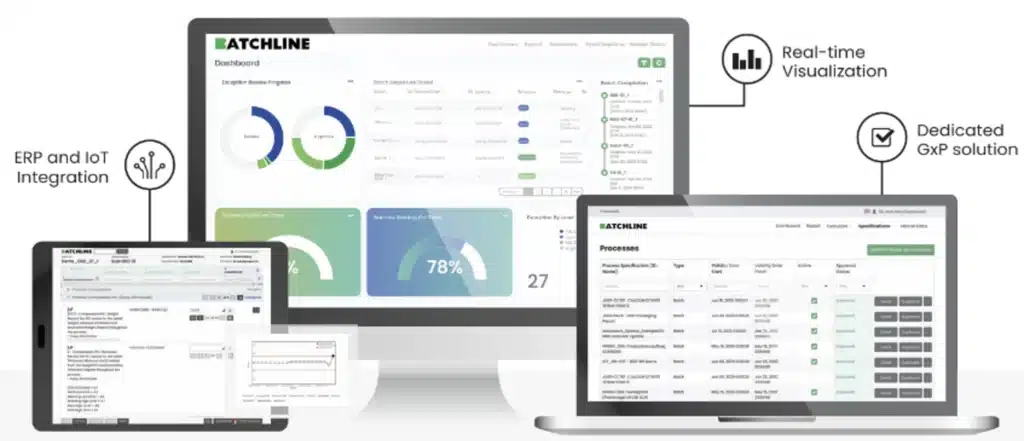
Best suited for organizations looking to:
- Focus on improving production record efficiency and batch review
- Launch digital batch records in rapid time and minimal efforts
- Leverage out of the box features that are pre-defined and qualified following best practices
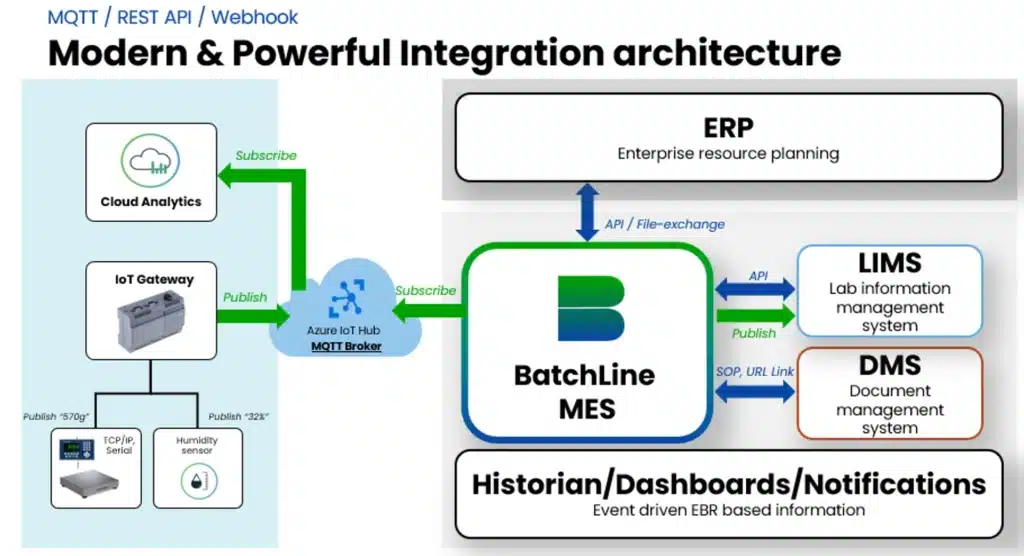
- Simplify equipment and systems integration through IoT and web-based connectors
Configure, maintain, and expand the deployment using internal resources with minimal vendor dependence
Tulip
Tulip is a no-code platform focused on Frontline Operations, that enables life sciences manufacturers to build, deploy, and scale digital applications highly tailored to their unique operations.
Rather than providing a predefined MES, Tulip’s approach is for a composable MES that is setup by assembling applications that model the real frontline process and provide Electronic Batch Records (EBR), manufacturing execution, and electronic logbooks.
As a no-code platform it can be further extended into wider scope on the Laboratory (LIMS & LES type use cases), sample management, Overall Equipment Effectiveness (OEE) monitoring, digital work instructions, operator guidance, quality management, production dashboards, and more.
Designed for continuous and iterative digital transformation, Tulip empowers manufacturers to start fast with their highest-priority use cases and expand over time through rapid, agile increments that align with business objectives and implementation timelines.
Its open ecosystem enables seamless integration with existing IT and OT systems, allowing organizations to modernize operations while preserving investments in current technologies.
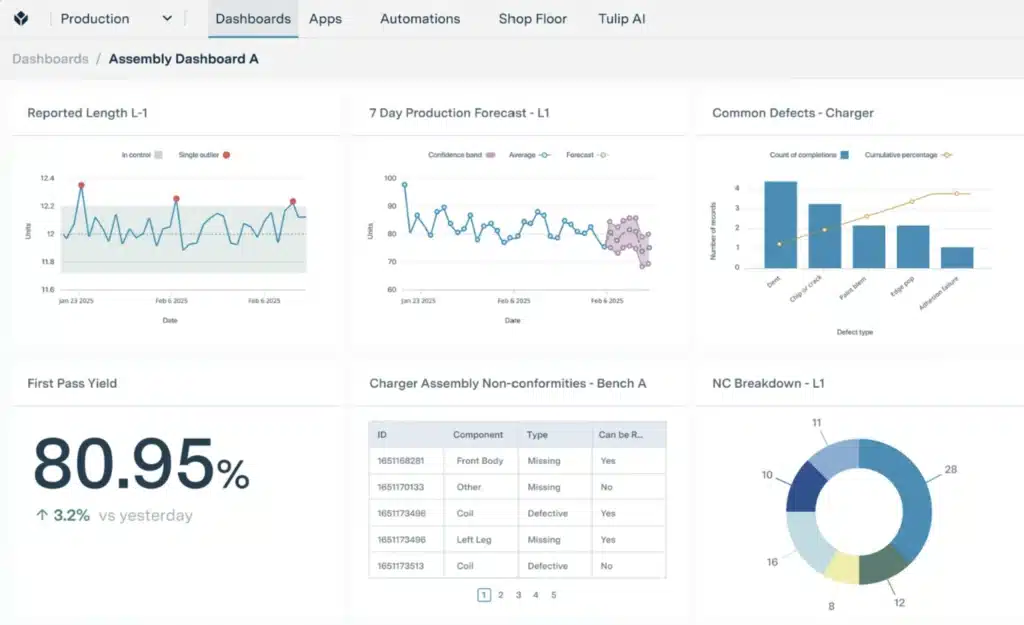
Best suited for organizations looking to:
- Build a composable MES exactly tailored to their unique manufacturing processes
- Develop and deploy no-code applications for a wide range across manufacturing, Lab, and quality operations.
- Digitize paper-based and legacy processes through a phased, agile approach
- Continuously expand digital capabilities as business requirements evolve
- Deep connectivity to other systems, sensors, machines & devices
- Empower customer teams to drive continuous improvement and operational excellence
- Leverage AI-powered capabilities to enhance productivity, quality, and decision-making
MasterControl Manufacturing Excellence (Mx)
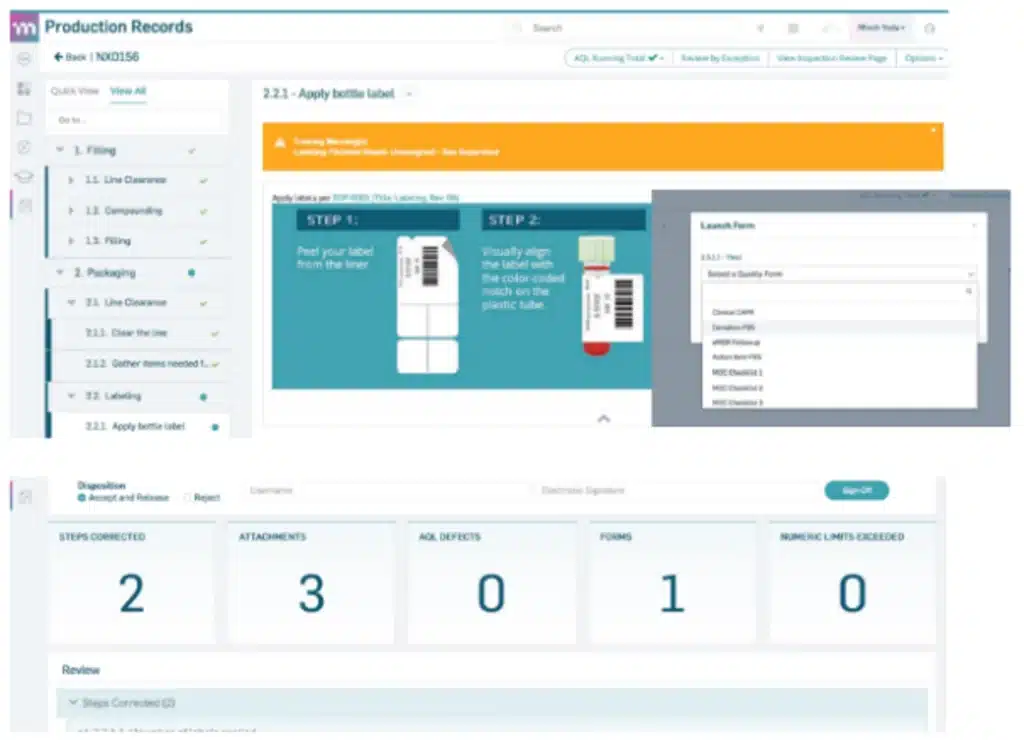
MasterControl Manufacturing Excellence (Mx) extends MasterControl’s Quality Management platform into manufacturing operations.
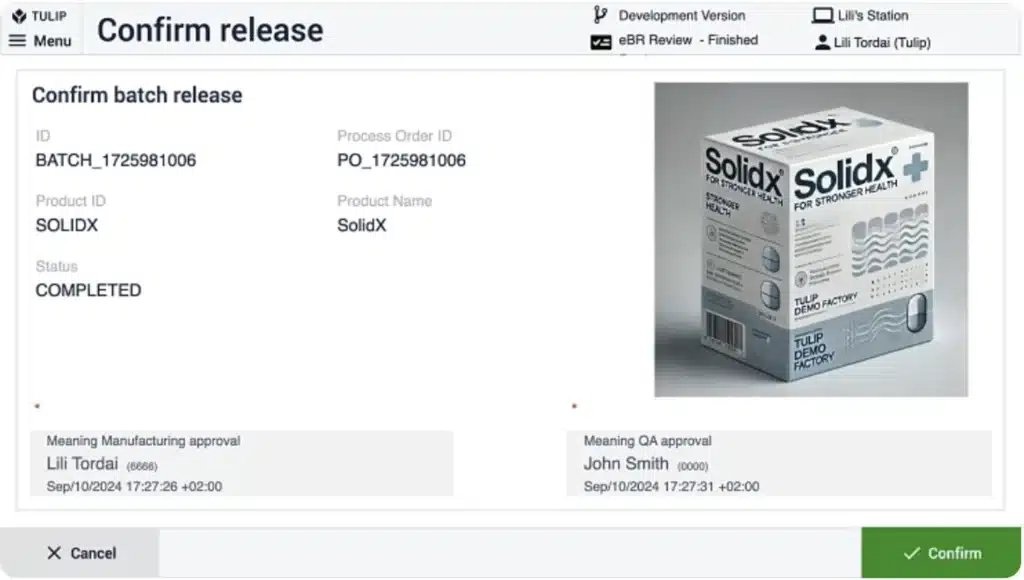
It connects production records with quality processes including deviations, CAPA, change control, training, and document management to provide end-to-end visibility across manufacturing and quality.
Designed to unify quality and manufacturing within a connected digital platform, MasterControl Mx helps organizations improve collaboration, streamline GxP processes, strengthen traceability, and maintain compliance throughout the product lifecycle.
It is particularly well suited for organizations looking to extend their quality processes deeply into manufacturing operations.
Best suited for organizations looking to:
- Connect manufacturing execution closely with quality management in a unified platform
- Strengthen regulatory compliance and inspection readiness through connected batch data through quality events and training records
- Quickly extend existing MasterControl eQMS capabilities into manufacturing operations
- Streamline validation through automated tools provided within the platform
How to choose the right MES software
Selecting the right Manufacturing Execution System (MES) requires evaluating your resources, budgets and timeline expectations, manufacturing complexity, regulatory requirements, existing technology and long-term digital transformation goals.
BatchLine MES, Tulip, and MasterControl Mx each support different implementation strategies:
- BatchLine MES
as a purpose-built MES enables a rapid deployment, and recipe setup and verification can be done by the customer themselves easily and with high ROI relative to cost.
Batchline customers typically learn how to configure during an initial supported phase, and then are able to maintain products and processes themselves to fully adopt across their operation.
- Tulip
as a highly flexible, no-code platform encourages a phased deployment to evolve the custom manufacturing applications and composable MES solutions following a wide digitalization program, customers are able to become application builders themselves, as a strategic in-house capability, or leverage Factorytalk’s expert consultants and engineers.
- MasterControl Mx
unifies manufacturing and quality, and the implementation approach lends itself to extending the eQMS processes into production such as to perform point-of-use checks of user training validity, and to raise Deviations and CAPA directly from production issues. The Mx EBR capability is an easily accessible tool that customers can learn through the project.
The best choice depends on your organization’s digital maturity, regulatory environment, implementation timeline, integration needs, and long-term business objectives.
Key Decision Parameters
- Implementation Timeline:
Do you require a solution that can be deployed within a few weeks or months, or does a structured 6–8 month rollout align with your project plans?
- Solution footprint:
Do you focus on the MES production records and equipment logs or require a broader capacity to extend across entire facility processes?
- Budget:
Are you prioritizing a lower total cost of ownership, predictable SaaS subscription pricing, or an enterprise platform investment?
- Integration Requirements:
Do you need to connect simple measurement devices, or larger business systems such as ERP, LIMS or machine and equipment PLCs, SCADA and historians?
How to choose the right MES implementation partner
Experience has shown that successful MES projects depend on more than selecting the right software. Choosing an experienced implementation partner is vitally important to ensure a smooth and compliant deployment, user adoption, and long-term success.
When selecting an implementation partner, look for a team that can provide:
- Proven experience in MES pharmaceutical and life sciences manufacturing
- Expertise in GxP regulations and Computer System Validation (CSV)
- Deep manufacturing process and quality management knowledge for your sector
- Integration capabilities across enterprise and shop-floor systems
- Consultants for training, change management, and ongoing support
- A collaborative approach that aligns technology with your business goals
Your Partner for Successful MES Implementation
Factorytalk has over 20 years of successful experience in critical MES deployments across pharmaceutical, biotechnology, medical device, ATMP and other GxP-regulated manufacturers across the world.
As acknowledged experts, our implementation and consulting teams for BatchLine MES, Tulip, and MasterControl, provide you with technology-neutral guidance to help evaluate your requirements and recommend the solution that best fits your manufacturing processes, compliance objectives, and digital transformation strategy. We simply wish to see all companies easily and smoothly eliminate GxP data on paper.
Our services span the entire project lifecycle, from digital strategy and process assessment, throughout design/build, implementation, Computer System Validation (CSV), system integration, training, and ongoing support.
We are proud to help all our clients from global top 10 Pharma to small and mid-sized manufactures accelerate digital transformation while maintaining regulatory compliance and operational excellence.
Frequently Asked Questions (FAQs)
MES is software that manages and monitors manufacturing operations in real time. It helps life sciences manufacturers improve production efficiency, product quality, traceability, and regulatory compliance through capabilities such as Electronic Batch Records (EBR), workflow automation, and electronic signatures.
A strong MES partner combines expertise in life sciences manufacturing, GxP compliance, Computer System Validation (CSV), system integration, and implementation. They help ensure a successful deployment and long-term value from your MES investment.
The top MES depends on your manufacturing processes, compliance requirements, and business goals. Solutions such as BatchLine MES, Tulip, and MasterControl Manufacturing Excellence (Mx) each offer different strengths for regulated manufacturers and are among the leading modern breed of products in the space.
Consider your manufacturing complexity, regulatory requirements, existing systems, scalability, and implementation timeline. The right MES software should support both your current operations and future digital transformation goals.
Yes. Most modern MES platforms integrate with ERP, LIMS, SCADA, automation systems, and other IT/OT technologies to improve data flow, traceability, and production visibility.