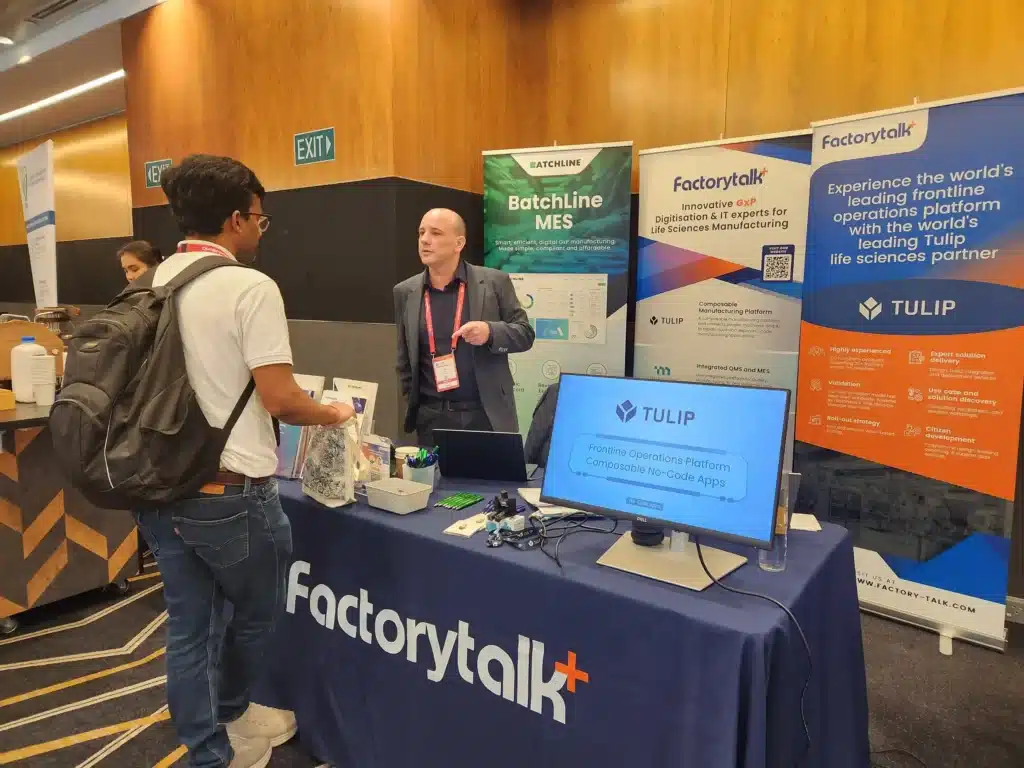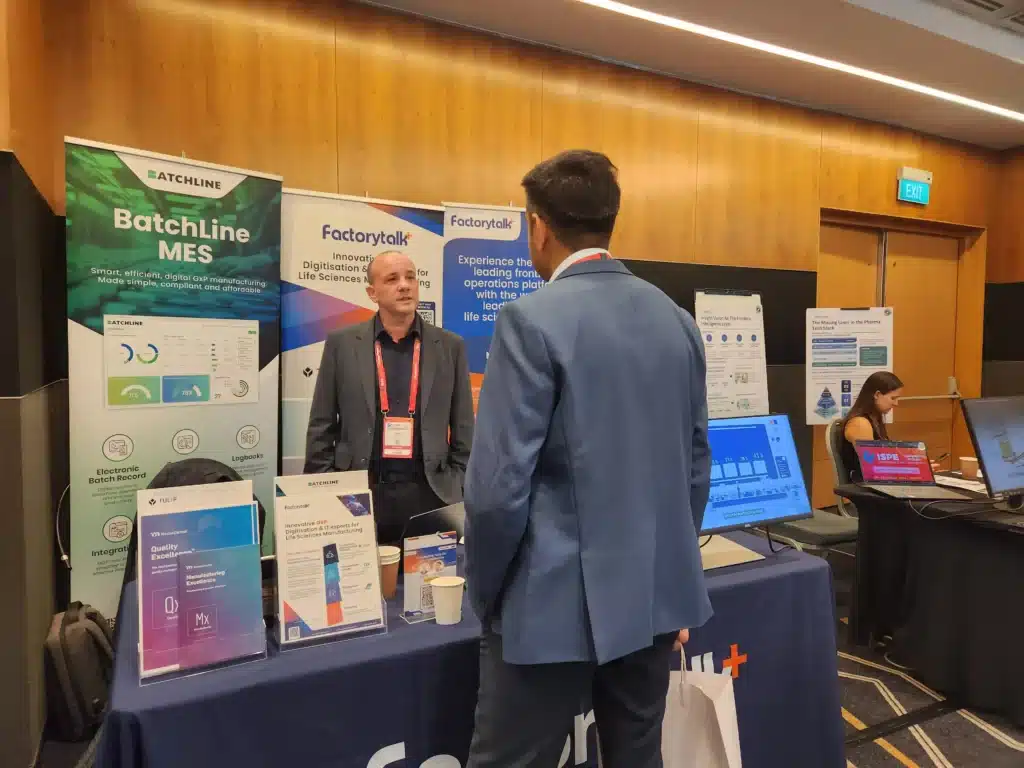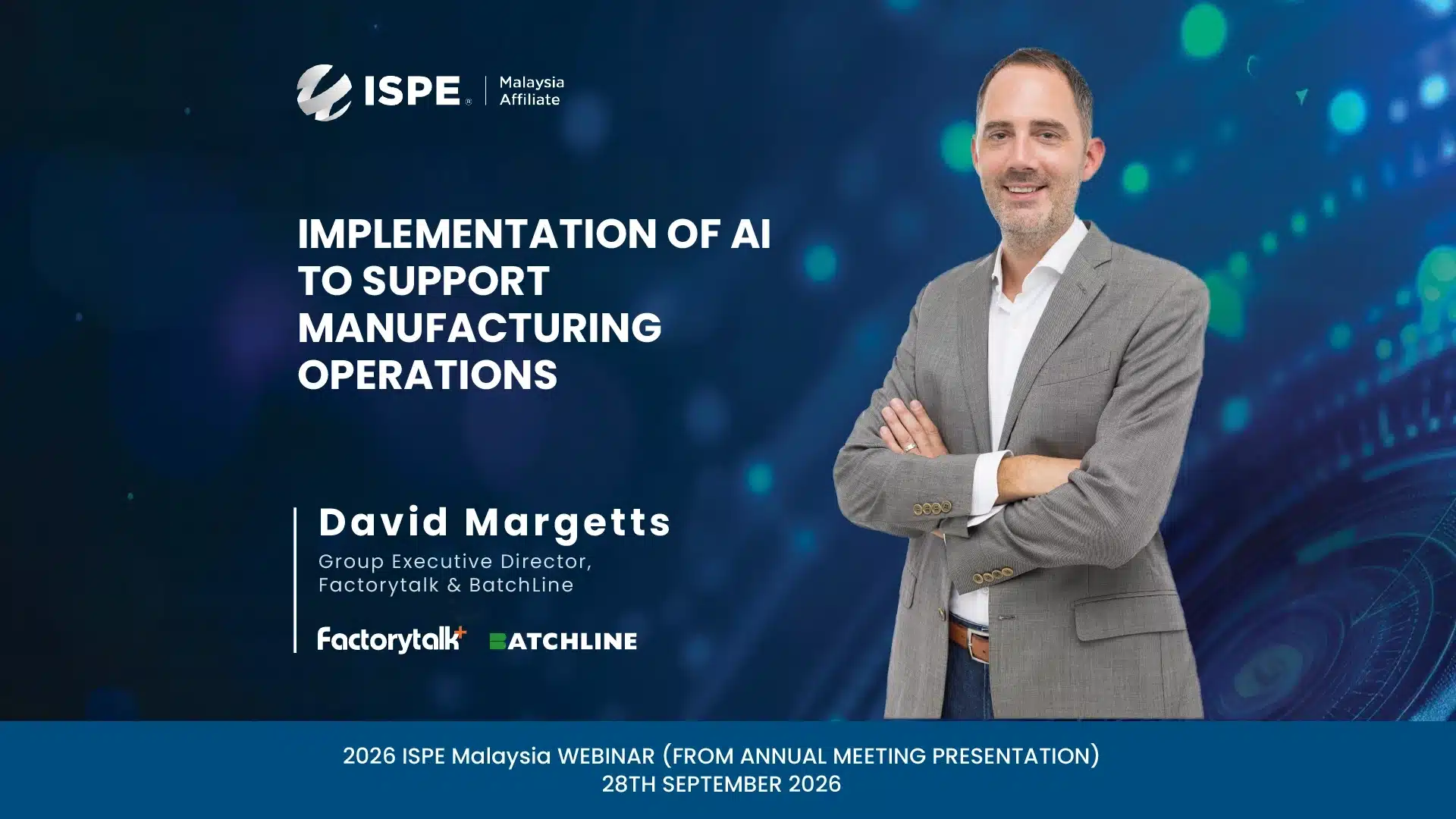

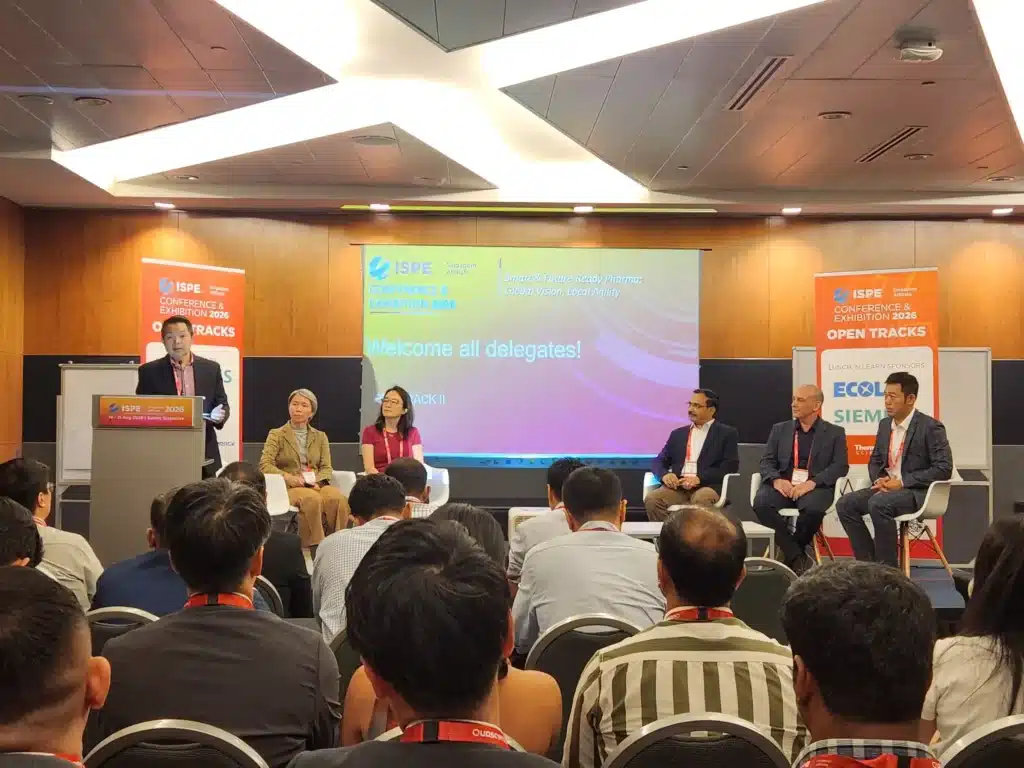
A big thank you to everyone who visited the Factorytalk booth at ISPE Singapore 2026 and joined our speaking session. It was a pleasure connecting with life sciences professionals and exchanging ideas on the future of digital manufacturing.
The session, presented by David Holt, Group Executive Director at Factorytalk, and David Li, IT Experience Lead – Consumer Health Manufacturing Sites at Bayer, explored Bayer Indonesia’s MES digitalisation journey and demonstrated how composable, no-code technology can support complex GxP manufacturing processes, from MES and Electronic Batch Records (EBR) to emerging AI-assisted authoring.
Key learnings from the session
1. Move beyond paper with a composable MES
Bayer’s journey began with challenges familiar to many pharmaceutical manufacturers: paper-based processes prone to errors, a legacy weighing and dispensing system, lengthy batch reviews, and limited real-time production and material traceability.
The project demonstrated a different approach to MES building around modular, configurable no-code applications that mirror actual manufacturing processes and can be continuously improved and scaled.
2. Full MES can be composable
The Bayer solution demonstrates that composability can extend well beyond individual digital workflows.
The MES architecture brings together 38 controlled applications, connecting ERP demand and governed configuration through to digital execution and batch approval. It includes 6 MES core apps, 27 manufacturing and packaging process apps, and 5 supporting apps, with integration to SAP and weighing scales.
Rather than relying on one large application, these interconnected apps work together to create a controlled and flexible manufacturing environment.
3. Digitalisation delivers value to the people using it
After eight months, feedback highlighted benefits across Manufacturing and Quality. Operators gained complete electronic batch records without manual signatures, QA teams benefited from automated exception triggers, and supervisors saw EBR supporting Right-First-Time execution and reducing documentation errors.
The wider impact includes shorter lead times, reduced manual batch-report effort, stronger data integrity and visibility, and opportunities for greater manufacturing throughput.
4. Composability is expanding beyond manufacturing
The session also looked ahead to applying the same approach to laboratory operations. A composable LIMS model can replace fragmented systems and paper-based processes with adaptable applications and workflows, improving traceability, visibility, compliance, and consistency across laboratories.
5.AI can accelerate authoring with humans in control
AI is creating new possibilities for how digital applications are developed and validated.
The session demonstrated how documents, images, videos, and prompts can be used as inputs for AI-assisted app authoring, with AI-generated content treated as a draft for human review, editing, approval, and controlled release.
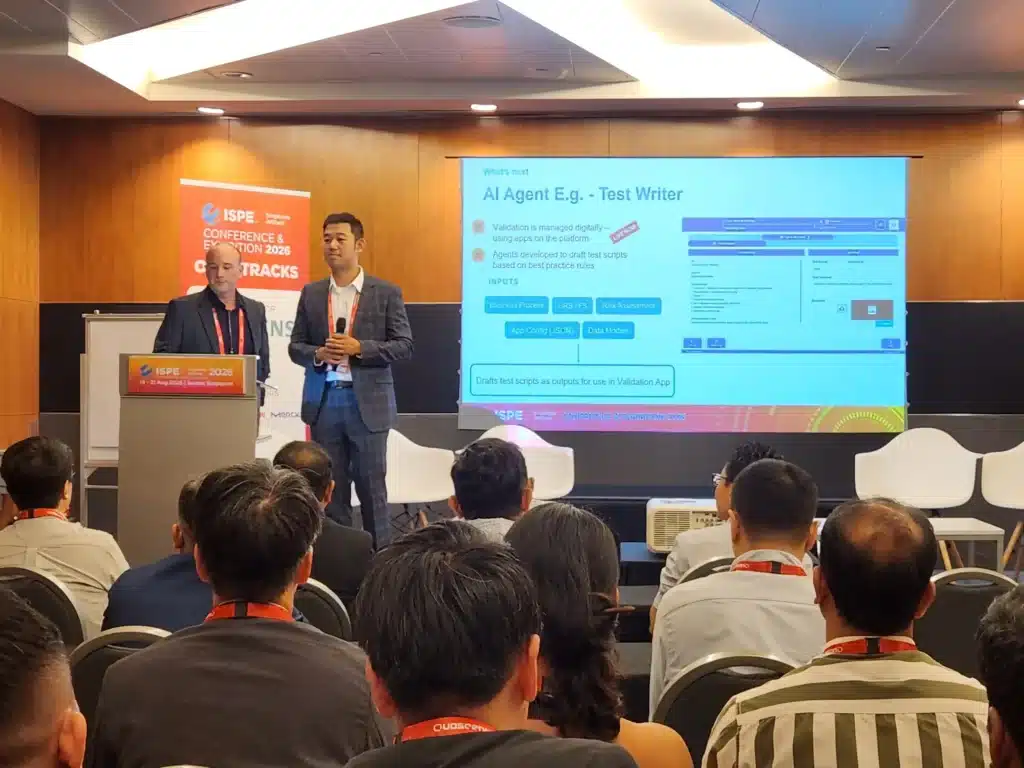
Factorytalk is also exploring purpose-built AI agents across the development lifecycle, including software testing, validation, and engineering reviews. One example already in use is an AI Test Writer, which drafts validation test scripts based on defined inputs and best-practice rules.
From Composable MES to the Future of AI-Enabled Manufacturing
The key message from the session was clear: composable digitalisation is no longer just a concept.
It can support sophisticated, validated MES environments today, while creating a flexible foundation for future applications across manufacturing, laboratories, validation, and AI-enabled operations.
Thank you again to everyone who joined our session and visited the Factorytalk team at our booth.