

Artificial intelligence (AI) is moving rapidly from experimentation into practical pharmaceutical applications. But for GxP manufacturers, adopting AI is not simply about choosing the latest technology.
The bigger question is: Are pharmaceutical manufacturers digitally and operationally ready for AI?
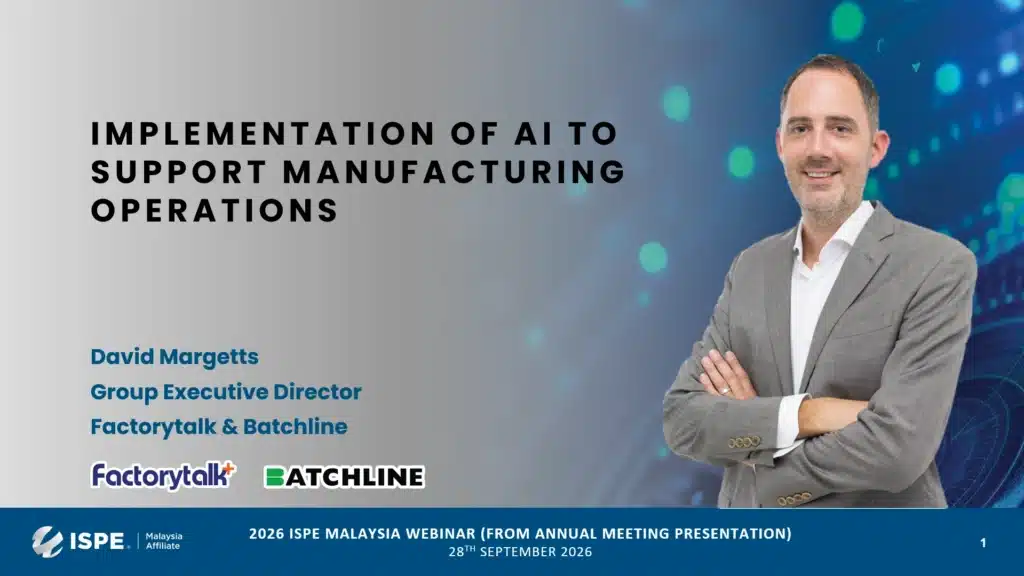
This article draws on insights shared by David Margetts, Group Executive Director at Factorytalk and BatchLine, during his “Implementation of AI to Support Manufacturing Operations” session at the 2026 ISPE Malaysia webinar. The session explored AI in GxP manufacturing, evolving regulatory expectations, validation approaches and real-world industry use cases.
Where can AI be used in pharmaceutical manufacturing?
AI opportunities are emerging across manufacturing, quality and regulatory operations.
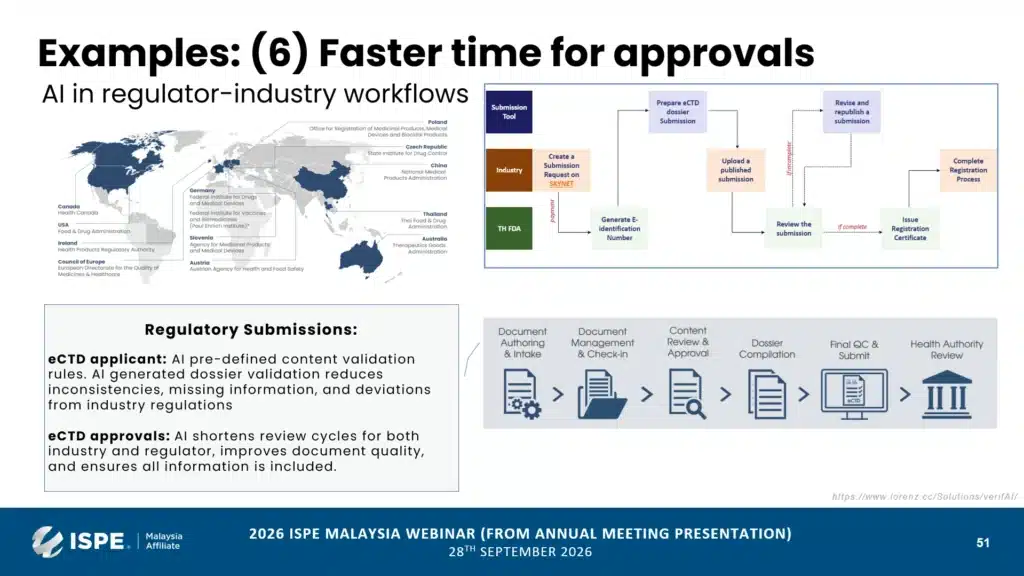
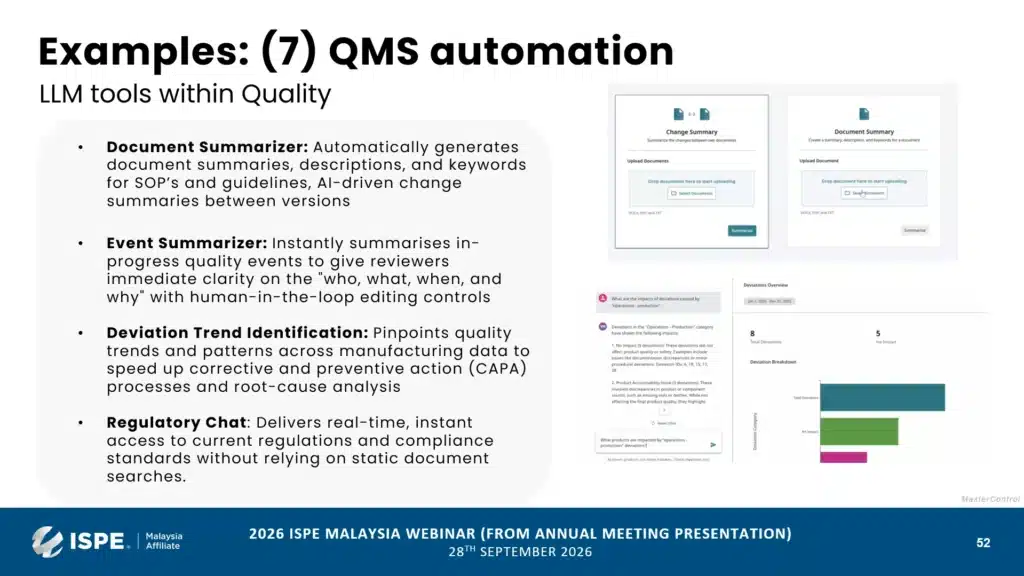
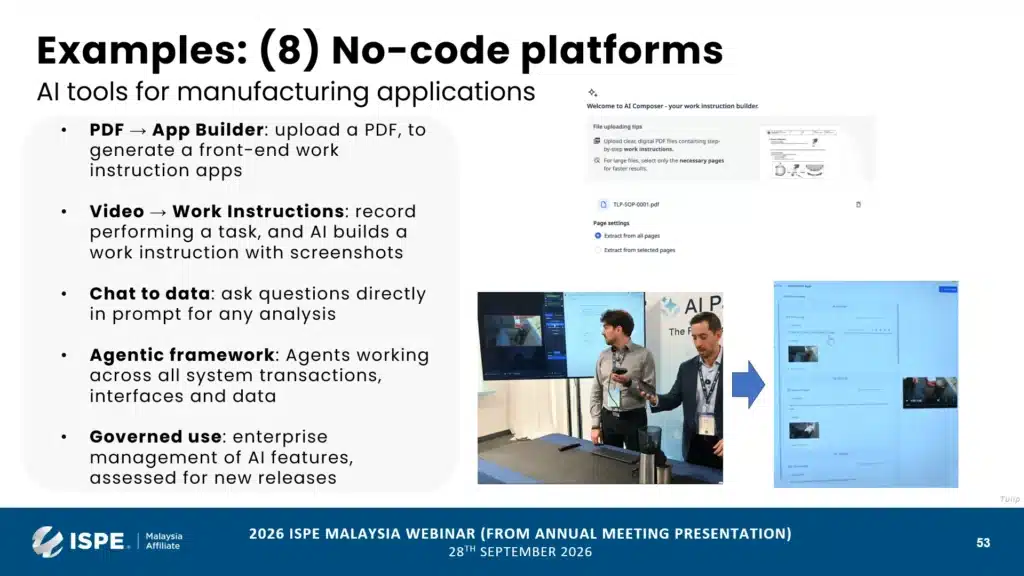
Practical applications discussed during the session included using AI to support regulatory and document-intensive workflows, analyse quality information, and automate elements of manufacturing review and verification. The presentation also highlighted manufacturing applications such as analysing process variability, computer vision, reducing false rejects and verifying manual activities.
The opportunity is not simply to automate more. It is to identify where people spend significant time searching, reviewing, checking and interpreting information and where AI can meaningfully support that work.
What does pharmaceutical AI readiness require?
Before introducing AI into GxP operations, manufacturers need the right foundations.
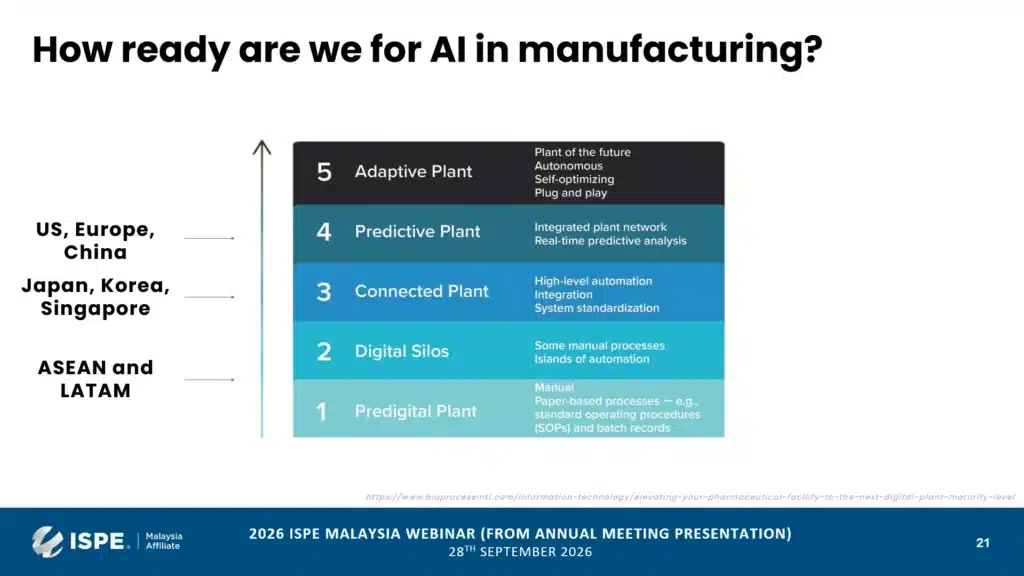
Digital and data readiness come first. AI needs accessible, reliable and contextualised information. Manufacturers still dependent on paper or disconnected systems may therefore need to strengthen their digital foundations before they can realise AI’s full potential.
Governance is equally important. Pharmaceutical companies need to consider data privacy, security, accountability, accuracy, model management and explainability when applying AI in regulated environments.
Finally, human oversight remains critical. The direction is not necessarily toward removing people from GxP decisions, but toward using AI to support review, verification and decision-making while maintaining appropriate human control.
How should pharmaceutical companies start with AI?
A practical AI strategy can start with three questions:
- Where do we need to improve?
- What data do we already have?
- Where could AI reduce manual effort or improve decision-making?
This reflects a key message from the ISPE Malaysia session: manufacturers should begin with the operational problem and available data rather than introducing AI simply because the technology exists.
Is pharmaceutical manufacturing ready for AI?
For many manufacturers, the answer will depend less on access to AI technology and more on their digital maturity, data quality, governance, validation approach and ability to maintain appropriate human oversight.
AI has significant potential across pharmaceutical manufacturing, quality and regulatory operations. But responsible adoption starts with building the right foundation.
Ready to explore AI and digitalisation in your GxP operations?
Factorytalk helps life sciences organisations build the digital foundation for modern manufacturing from digitalisation and GxP systems to validation and compliant technology adoption.